How to Cook the Perfect Steak: A Chef’s Guide to Juicy Results
Choosing the Right Cut of Meat
Not all cuts are suitable for a tender, flavourful steak. The best ones have natural marbling—fat distributed within the muscle—which melts during cooking and keeps the meat juicy and succulent.
- Sirloin: Balanced, tender, and full of flavour (the cut used in this recipe)
- Ribeye: Exceptionally juicy thanks to its generous marbling
- Tenderloin: Extremely soft and buttery, though less flavourful and more expensive
Avoid very lean or tough cuts such as rump, round, or shoulder, as these tend to dry out and become chewy when cooked quickly.
The Importance of Thickness
A great steak must be thick. The ideal thickness is at least 3cm (just over 1 inch), and preferably 4–5cm (1.5–2 inches). Thin steaks cook too quickly, dry out easily, and do not allow proper browning to develop. A thick cut, on the other hand, lets you achieve a deep, flavourful crust on the outside while keeping the interior pink and juicy.
Bring the Meat to Room Temperature
One of the most common mistakes is cooking steak straight from the refrigerator. Always remove the meat from the fridge at least 30 minutes before cooking—ideally 1 hour. This prevents thermal shock and ensures even cooking throughout, keeping the steak tender and perfectly done. Before cooking, pat the meat dry with kitchen paper to remove any excess surface moisture, which can hinder browning.
How to Prepare the Steak Before Cooking
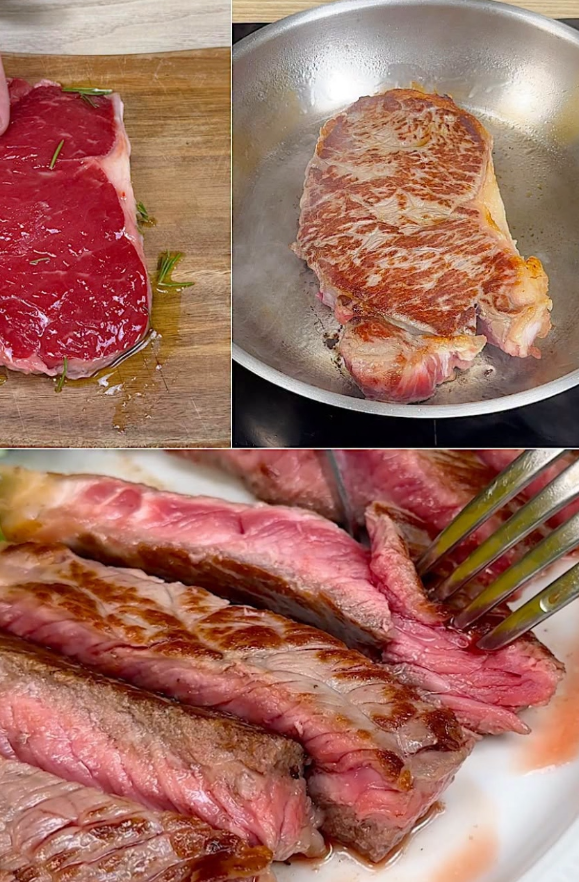
Place the steaks on a cutting board and massage them lightly with a thin layer of extra virgin olive oil. Add a few fresh rosemary needles, pressing them gently onto the surface to release their aroma. This step adds fragrance, creates a protective layer, and improves browning during cooking. Do not season with salt yet—the reasoning for this is explained below.